Posted March 31, 2026 in Uncategorized
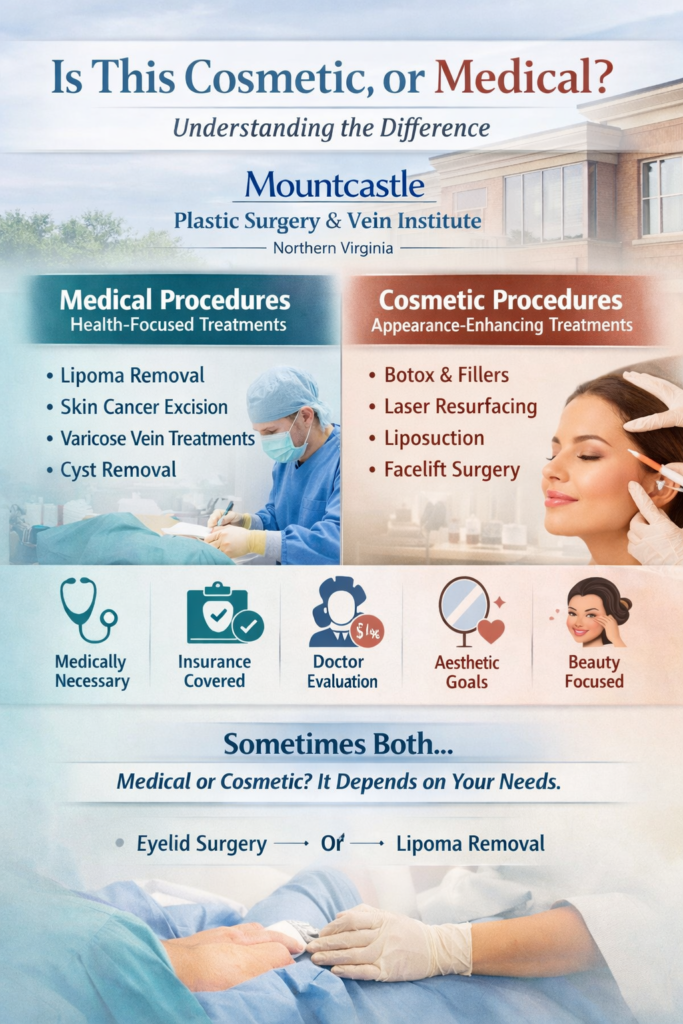
When considering treatment at a plastic surgery or medical aesthetics practice, one of the most common questions patients ask is:
“Is this cosmetic, or is it medical?”
At Mountcastle Plastic Surgery & Vein Institute in Northern Virginia, we offer both medical and cosmetic procedures — and understanding the difference can help you choose the right treatment path for your goals.
Let’s break it down clearly.
What Are Medical Procedures?
Medical procedures are treatments performed to address health concerns, functional issues, or medically necessary conditions.
These procedures often:
- Treat symptoms such as pain, discomfort, or impaired function
- Address abnormal growths, skin conditions, or vascular issues
- May be covered by insurance (depending on your plan)
- Require medical evaluation and diagnosis
Examples of Medical Procedures at Our Practice:
- Lipoma removal
- Cyst removal
- Skin cancer excision
- Vein treatments for symptomatic varicose veins
- Medically necessary dermatologic surgery
These treatments focus on restoring health, preventing complications, and improving physical comfort.
What Are Cosmetic Procedures?
Cosmetic procedures are elective treatments designed to improve appearance rather than treat a medical condition.
They typically:
- Enhance facial or body aesthetics
- Improve skin tone and texture
- Address signs of aging
- Are self-pay (not insurance-based)
Examples of Cosmetic Services:
- Injectable treatments (Botox®, fillers)
- Laser skin resurfacing
- Body contouring treatments
- Cosmetic surgical procedures
- Medical spa treatments
These services focus on helping patients feel more confident in their appearance.
When a Procedure Can Be Both Medical and Cosmetic
Sometimes, the distinction isn’t black and white.
For example:
- A lipoma may be removed because it causes pain (medical)
- The same lipoma may be removed because it is visible and bothersome (cosmetic)
Similarly:
- Eyelid surgery may improve vision (medical)
- Or it may be performed purely for rejuvenation (cosmetic)
The key difference often lies in medical necessity and documentation, not just the procedure itself.
Why the Distinction Matters
Understanding whether your treatment is medical or cosmetic affects:
- Insurance coverage
- Consultation process
- Pre-operative requirements
- Treatment setting
- Recovery expectations
Our team evaluates each patient individually to determine the most appropriate classification and treatment plan.
How We Help You Choose the Right Path
At Mountcastle Plastic Surgery & Vein Institute, we begin with a comprehensive consultation. During this visit, we:
- Review your medical history
- Evaluate your concerns
- Determine medical necessity (if applicable)
- Discuss aesthetic goals
- Provide clear cost and insurance guidance
Our goal is transparency — so you feel informed and confident before moving forward.
Frequently Asked Questions
Will insurance cover my procedure?
If your condition meets medical necessity criteria, insurance may provide coverage. Cosmetic procedures are not covered.
Can I combine medical and cosmetic treatments?
Yes. Many patients choose to address both functional and aesthetic concerns in a coordinated plan.
How do I know which category my concern falls into?
The best way is through a professional evaluation. Many conditions require an in-person assessment to determine classification.
Final Thoughts
Whether your goal is improved health, enhanced appearance, or both — understanding the difference between cosmetic and medical procedures helps you make empowered decisions.
If you’re unsure where your concern falls, scheduling a consultation is the best first step.
Clarity leads to confidence — and we’re here to guide you every step of the way.
